
In this increasingly digital world, businesses need a social media presence. However, you can’t create compelling social media content without having a target audience. Defining a target audience involves finding your audience, creating a persona, learning to engage an audience, and engaging with the audience. Understanding and applying these principles is crucial for gaining and maintaining an audience on social media.
We will talk about how to define an engaging audience using Stratezine’s target audience as an example. For Stratezine, the audience is social media practitioners. Our team conducted interviews with different social media experts so we could discover the best practices for identifying and adapting to audiences on social media. We analyzed their success and failures.
1) Find Your Audience
Finding your audience is crucial to any successful endeavor, whether starting a business, creating content, or launching a product. You need to know who your audience is to tailor your message, approach, or product to their specific needs and interests. Identifying your audience can help you refine your strategy, make more informed decisions, and ultimately increase your chances of success.
Finding your target audience can be challenging, particularly if you don’t have a specific goal that you are trying to achieve. Knowing and understanding what most people are looking for and what interests them is essential.
Knowing your audience enables you to learn what they search for and what kind of content is helpful to them. This will help you better refine your audience.
Andrew Collette founded the YouTube channel, The Andrew Collette Show. His channel is all about Pokémon video games. He currently has over 100,000 subscribers to his channel.

Here are some tips Andrew gives to help you define your audience.
● Don’t have such a broad audience
He says, “You have to ‘mega niche.’” Meaning you have to funnel down your topic. Andrew originally started a YouTube channel that focused on Marvel and Nintendo. He said that it was unsuccessful because it was too broad. He chose Nintendo and started to niche down there until he got to Pokémon challenges. These challenges are all different, and Andrew does a variety of challenges. One example Andrew gave is he will go through other Pokémon games and only battle using one Pokémon the whole time.
● People follow accounts that are specific to a genre
Knowing your audience will allow you to create content for them specifically. Individuals who like Pokémon challenges will find Andrew’s channel (like his).
● Have unique content for your audience
Use significant trends, but make them unique and specific to your audience. Andrew likes to find directions he can change and make memorable for his audience. You should rethink your strategy if you are shouldering a lot of traffic.
Creating content for your audience
Knowing your audience gives you helpful information on what type of content you should create for them. For example, Bek Marsden is a TikToker with over 20,000 followers.

She originally started her TikTok account to make funny videos. She said, “I love to laugh and make others laugh.” She originally began making videos that she thought were funny. Over time, she realized she had to create content that her specific audience would like. She focuses on young moms because that is who she relates to and who her content is mainly for.
She also said, “Sometimes I will think of a video to make, and then I’ll remember that my audience won’t find that as funny as I do.” Bek doesn’t know why some videos do so well and others don’t. But, she said, “I try to keep up with the trends, and I also read the comments that my viewers leave. Sometimes they even suggest what type of videos to make.”
Creating valuable content for your audience requires you to know what they want, what trends interest them, and what they value.

Kimberly Kempton, the founder of Brixley Bags, has 19.6K followers on Instagram, 3,000 of which she accrued in the last two months.
Although she posts photos, videos, and occasional reels, she maximizes the power of Instagram stories. She regularly posts videos of her receiving, packaging, and shipping orders. In addition, she includes behind-the-scenes polls, general life happenings, and random tips and tricks that she finds. She believes showing and explaining products to her audience is essential rather than taking a salesperson approach.
Whenever she models one of her bags, she explains her outfit and where she got her clothes. This adds value to her audience because it’s common for people in her target audience to ask what brands she uses and why.
TikTok has also increased its audience reach. Two of her Tik Toks went viral this year, which boosted sales. She sold the projected inventory for the entire year in a few short months. Her goal is to reach 100K followers on Instagram and Tik Tok and to have two more videos go viral this year.
Kimberly said, “engagement is the key to my success and my followers being so loyal.” She frequently shares customers’ posts where they highlight their Brixley products. Kimberly also responds to all company emails and asks the audience for their opinions on new products through the Instagram story. She shared, “I encourage engagement by engaging right back.”
Andrew Collete, Kimberly Kempton, and Bek Mardsen exemplify how creating valuable content for an audience stems from having a solid persona. Andrew can narrow his topic because he already chose an audience. Bek Marsden stays up-to-date on trends and implements feedback she receives on her videos to determine what kind of content her audience will find funny. Kimberly constantly expands her products to adapt to the needs and tastes of her audience of young adults who love to travel in style. Knowing their persona enables them to create quality content relevant to their audience.
2) Create Your Persona
A persona is an excellent tool to help creators find their audience. It is a composite sketch of the target audience, not describing one individual. They help us find the key messages to meet our target audiences’ needs.
Several different things on the internet gain attention and a following. The Disney college program falls under this category. It is a unique opportunity for regular college students to post their experiences and gain a significant following.
Becca Thorpe
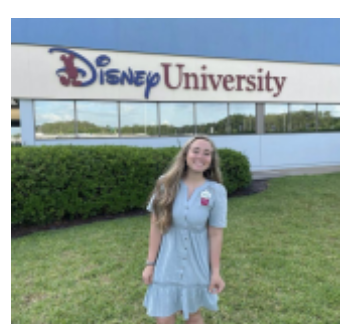
Becca is a 21-year-old college student from BYUI. She studies marketing and is in the Disney college program. She looked forward to gaining real-world experience in her dream career at Disney.
Her goal was not achieved in the way she thought. She made a Tik Tok video that went viral. After that, her life changed. She continued to post experiences, but some went viral, and others didn’t. Finally, after trial and error, she figured out what worked.
Becca explains her persona, “My persona is a character I’ve created called Disney Diana. It’s a female in her early 20s who is a big fan of Disney and Disney Parks. She tends to live in California or Florida because of her interest in being near Disney Park. She tends to be interested in taking “cute” Instagram pictures and creating Tik Toks that involve Disney. She tends to follow Disney influencer accounts and retail accounts for clothes.”
Becca said that the secret was her detailed persona and her ability to refine that persona. She said, “I refine this persona daily as I search for more trends on Instagram and Tik Tok to try and keep up with those changing interests and trends. I also pay attention to new offerings in the Disney Parks. As seen on Tik Tok, trends can change almost daily, so it’s good to continue being active on social media to ensure I don’t fall behind and become irrelevant. Another thing that I’ve done is follow other accounts that interest my persona so that I can see what they see on social media and what they’re interested in.”
Sammy Meza

Sammy Meza is like Becca in a lot of ways. She is in the Disney college program, a BYUI graduate, and posts on social media to document her Disney college program experience. As a result, Sammy has more than the average following, with 4,583 followers on Tik Tok and Instagram.
However, she doesn’t achieve the same success as Becca, even though she has a similar personality and similar content. In an interview with Sammy, she said, “she doesn’t really have a persona and that she just posts for fun.” She said she mainly posts for “young female, athletic, Disney-loving followers,” but that is the extent of her persona.
She does want to make social media a full-time job, so she follows a posting schedule and tries to keep up with trends. Despite her efforts, she wants to be somewhere else. However, Sammy is probably not the only one who posts for fun and wonders why her content does not gain popularity like other people.
Disney Do vs. Don’t
Creators can have very little to set them apart, like Sammy and Becca, but have different success rates. That comes from not only having the right audience but being able to constantly refine your content to find the right messages for them. Do more than try to imitate other creators and post the same content repeatedly. As you post content, your audience will teach you what they want to see.
“I believe I have created a similar persona to other Disney college creators but a specific persona different from other guests who come to the Disney Parks. Other creators target men, specifically Marvel fans or Star Wars fans, who may be older, such as in their late 20s or 30s. My persona represents a younger audience who has most recently had a rise in interest in the Disney company, especially the Disney Parks.”
Becca found that her ability to see and refine her persona is critical to success. In that time of trial and error, Becca tried making content for the wrong audience until she found the right one. She posted to what audience she thought other creators were aiming for, but she was unsuccessful. She had to post and do research to find what worked.
3) Learn to Engage an Audience
Effective businesses learn from their audience. Tracking analytics, adapting to your audience, knowing the trends and finding inspiration are vital steps to learning from your audience.
Nicole Schwartz, a professional freelance social media marketer in Los Angeles, CA, shared her experience about how she helps her clients target their audiences. When Nicole gets a new client, she asks them a list of questions to learn about their audiences. Nicole tells her clients, “I’m not going to be as good as someone who lives and breathes your brand daily. What are you working on? What are your customers excited about?”
She then brainstorms 20-30 ideas to implement over the next two to three months. Then she looks at the insights with her clients, and they decide how to move forward. Finally, she touches base with clients through weekly or bi-weekly calls to see how things are going.
She mainly focuses on Instagram and Facebook. She concentrates on these platforms because Tik Tok requires more time and needs to be better tailored toward small businesses.
Track Analytics
Nicole utilizes the insights tool on social media platforms to tailor messages to specific audiences. She said that each business is different, so how you target an audience for each particular brand will vary.
She noted that analyzing the posts people engage with and the type of people who follow your account helps target a specific audience. It’s also essential to identify the styles of posts that perform well. For instance, do images or reels receive more engagement? Analyzing the insights on each post will help you determine the most effective type of content for your specific audience.
She uses the Only Poll app to schedule posts. She also uses the Later app because a client likes its link-in-bio feature.
There are a lot of different analytic apps. Some apps cost thousands of dollars a year, but you shouldn’t pay lots of money for an app when they all perform the same functions.
When presenting data to clients, she has found that clients want to know the big picture of analytics, like which posts have the highest engagement and how much their business has grown. Therefore, presenting too much data to clients is only sometimes beneficial because the main points can get lost in the plethora of data.
Adapt to your Audience
As businesses learn from their audience, they must provide content that fulfills their changing needs.
One of Nicole’s clients has a high-end manicure salon chain. She typically posts pictures of fancy nails and how-to videos. However, Nicole found a funny quote about nails that the audience might enjoy. So she suggested that they try it out. She figured it could flop or become the most popular post. However, the humorous quote performed well, so now they know another effective way to reach their target audience.
Know the Trends
It’s essential to stay updated and utilize funny trends quickly. However, it’s also crucial to know what other brands are doing. For instance, she said that when the war in Ukraine started, she told her clients that she wouldn’t post for a while. In the meantime, she watched other brands to see what they posted in response to the conflict.
Her main tip for creating content is, “Don’t be afraid to try something new. Test different ideas, so that you don’t get stuck in your ways.”
Find Inspiration
Also, “Get your inspiration from what other people are doing. For example, if you’re doing social media for a cupcake company, follow many companies and see what people are responding to. But then also think bigger, don’t just think cupcakes, think pastries and donuts.” Innovation is critical for helping brands create fresh, relevant, and engaging content that audiences will love and follow.
4) Engage with your Audience
Engagement with your audience is beneficial on all social media platforms. Tara- A social media expert, Nicholle Nelson, says, “You can’t buy engagement. You have to build engagement.” What are effective ways being used to build engagement? Instagram Influencers Tried and True Moms shared their insights.
Instagram Influencers: Tried and True Moms
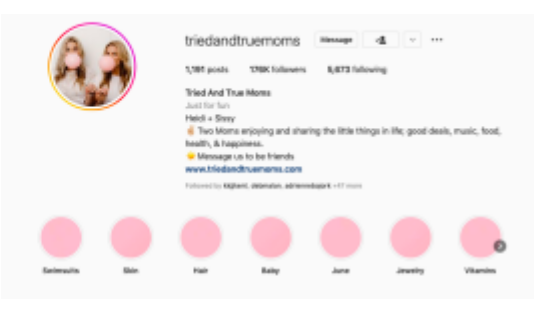
Tried and True Moms is an account on Instagram with 176k followers. It is run by influencer best friends Heidi and Sissy. An interview revealed, “Engaging with our audience is our most valuable tool! We both spend most of the day responding to comments and DM’s…We think responding is important because it builds trust with our audience. It shows that we care and that our account is to help and be a positive part of their day genuinely.”
Community engagement is what built their account. They are moms coming together to share tips and tricks with other moms. A positive platform is created when a community feels they can learn from each other.
So how did engagement help them grow?
Authenticity! Answering questions, striving to be the best part of their day, and building trusting relationships with consumers developed natural engagement with influencers and the community.
5) Build a Returning Audience
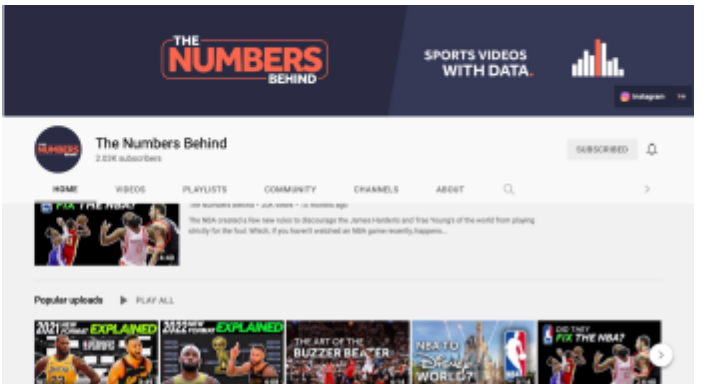
The Numbers Behind is a sports media group that has been posting content for over two years. In that time, they’ve gained a modest following, including over 2,000 followers on Youtube and almost 7,000 followers on Instagram.
Brothers Cooper and Carter Gilbert run this sports account. According to Cooper, the page aims to reach “higher knowledge level sports fans.” This can be a tricky task. Maintaining a returning audience is tough when their audience may be looking for a more specific kind of content.
So how does a smaller account focused on growth work to create a returning audience?
Two-Part Posting
The Numbers Behind has a unique strategy to ensure engagement and maintain a returning audience on Instagram. They have a two-part posting system. Part one is a question about guessing a player based on their contract or statistics. They encourage commenting on these specific posts to make people think about who they are. Then, within the next day or two, they’ll post a follow-up with the answer.
The second post is typically the one that gets the better engagement. Cooper believes this is because the reveal in the second post allows people to have a new understanding of the contract or the statistic. This makes them more likely to comment on it. In addition, focusing on engagement in specific posts helps them build a returning audience on a day-to-day schedule.
Establish a tone
The Numbers Behind focuses on establishing and maintaining a proper tone throughout all their posts and videos. Carter and Cooper want their posts to be fun, engaging, and informative. In their opinion, it’s OK if they don’t hit both, but they want to ensure they don’t lean too heavily in one direction.
“You can’t be LeBron and KD on social media,” Cooper explained. What he meant is that both of those athletes have a robust social media presence. However, their tone in that presence is entirely different.
LeBron is very uplifting and outspoken, whereas KD tends to attack the media and anybody who says anything negative about him on social media. So these things have worked for these players to build a social media following, but they focused on their specific tone and stayed within it.
The idea is that your followers follow you because of the specific kind of content you post. It’s okay to branch out and try new things, but you should maintain the same tone.
Use Analytics to Understand What Resonates
Cooper shared, “YouTube Analytics is by far the best. I check it probably 50 times a day. You can see everything down to how many views you’ve gotten in the last 20 minutes.” Analytics is one of the most vital tools when building an audience on social media. And that’s something that’s not lost on The Numbers Behind.
They used their analytics to learn that they get better engagement and more returning NFL fans on Instagram, whereas NBA fans tend to produce most long-form content on YouTube. Cooper was adamant that their company’s growth on these social platforms comes down to better understanding his audience through analytics. If the content isn’t clicking with the fans, they’re not likely to return to it. That engagement is seen through analytics.
Andrew Collette shared the importance of knowing his audience. He focused on the age range of the individuals who view his videos. YouTube Analytics shows the age demographic for those who have considered the content in the past 28 days. His audience is broad, so it is essential he focuses on the topic rather than the age range of his audience. This information is helpful for sponsors because they like an older audience that will spend money. Andrew shared the following graph from his account.
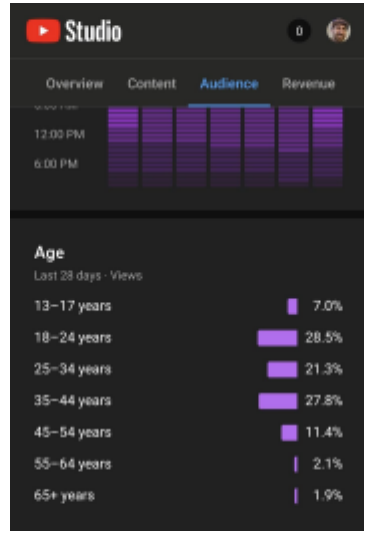
Analytics will guide you in creating relevant content for your audiences. When looking at these analytics, you must ask yourself the following questions.
● Are you doing things to reach your target audience?
● Are you creating content often?
● Are you thinking outside the box?
● What is your goal for your audience this week?
Conclusion
Defining an audience is a crucial step in any successful marketing strategy. Finding a target audience and creating a persona enables the creator to tailor messaging and content to meet their needs and preferences. This will improve engagement and allow the creator to understand the audience better and build a loyal following. The faster you adapt to the needs of your audience through quality content, the faster they will turn to you as a resource to satisfy their needs.
Recent Comments