What do Social media viewers think about AI-created Content, and can I use it?
INTRODUCTION
Social media is an integral part of our daily lives, and its impact on our culture continues to grow. In recent years, AI has generated news articles, social media posts, videos, and other types of content. It has provided an efficient and cost-effective way for content creators and social media practitioners to meet the growing demand for digital content. However, the use of AI in content creation has raised questions about the quality, authenticity, and creativity of the content generated by these algorithms. Is it even okay to use AI as a content creator?
There is no point in figuring out how and where to use it, if we do not first find out if it’s alright. Our consumers mainly get to decide if it is okay. How does AI affect them? Does the use of AI turn them away from the brand? These are the types of questions we hope to answer. Specifically, we seek to understand how social media users perceive and evaluate AI-generated content, and what factors influence their attitudes towards this type of content.
We aim to provide insights into the challenges and opportunities of using AI in content creation and inform content creators, social media practitioners, and marketers on how to best meet the needs, and the preferences of their audiences. To do this, we asked 142 people for their thoughts.
The participants are from diverse backgrounds and age groups. The majority (77%) of participants were between the ages of 18-25, and 43% of the respondents had an education level of high school. In this blog, we will share the results. We talk about how often they think they are exposed to social media and AI-generated content. We’ll go over their perceptions and opinions on how it affects their social media experience. Then which types of content do they think is okay for AI to generate? By analyzing the responses, we aimed to gain a better understanding of how AI is perceived by social media users, plus its potential impact on the future of social media.
EXPOSURE
How much time do they spend on social media?
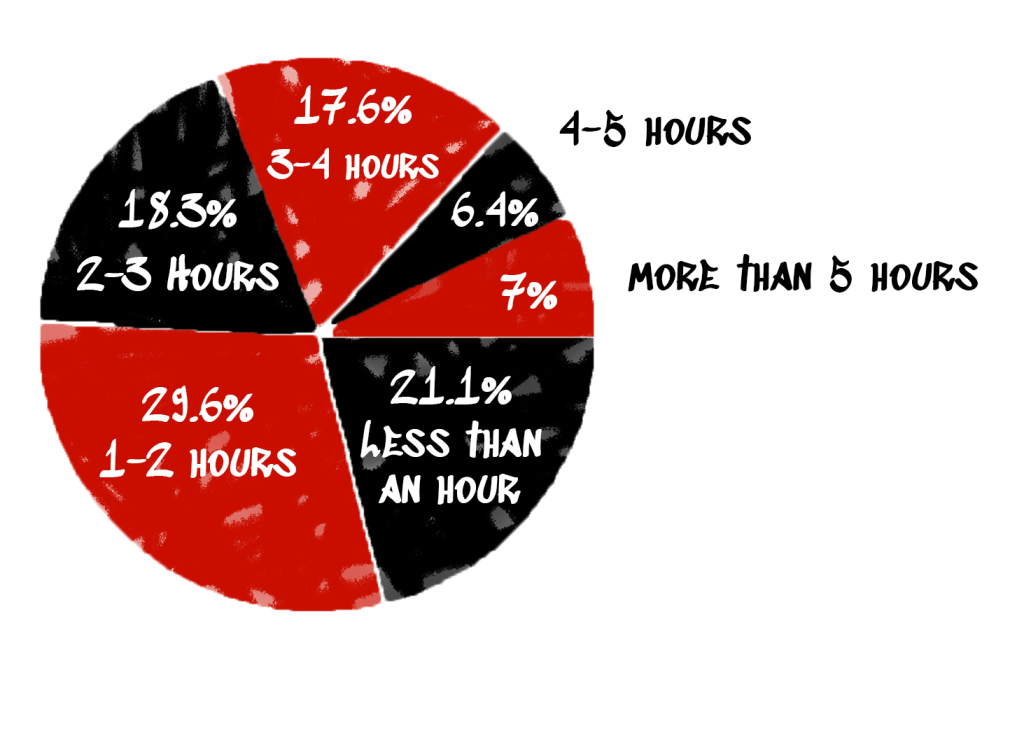
For us to fully know if the people we were talking to were the consumers that would affect our readers, we first asked how often they were on social media. Most of us are aiming for the people who spend more time on social media. We were hopeful, as social media has become an integral part of people’s lives, with many using it for a wide range of activities, including consuming and sharing content. Turns out, the majority of respondents spend between 1-2 hours per day on social media. Though this was on the lower side of the answers, it still proves that social media is a significant part of people’s daily routines. Most of them are most likely being exposed to AI-generated content often.
How often do they think they see AI content?
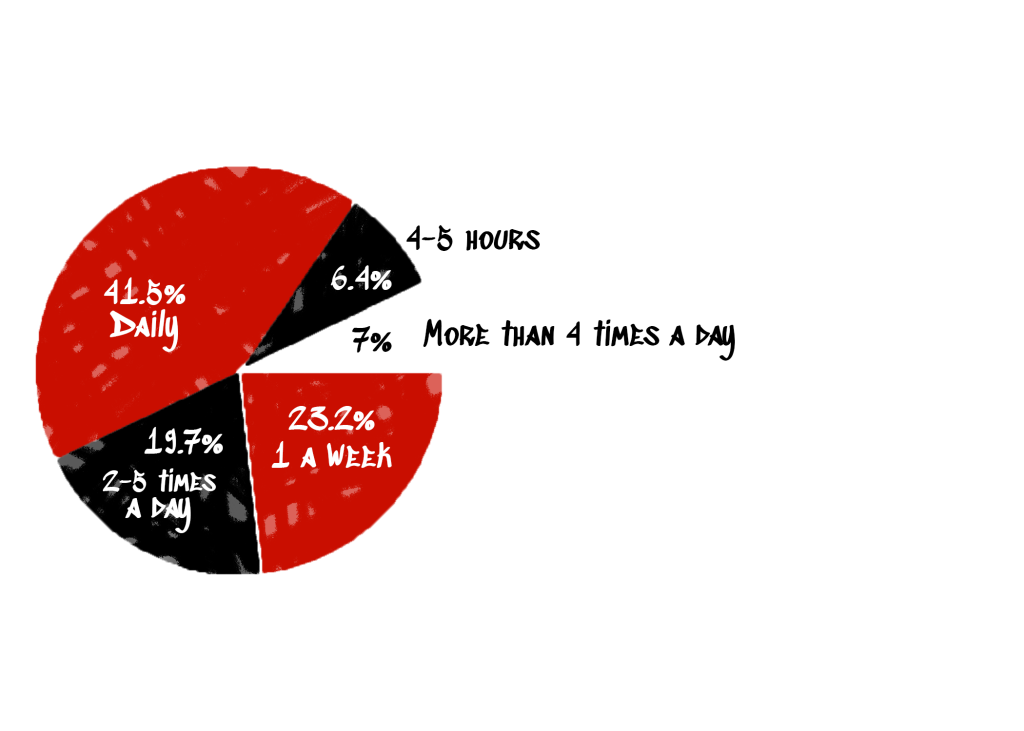
The participants seemed to agree, with 41.5% of them saying that they were exposed to AI content daily. Though many (42.9%) assumed it was much less often. There were some though who guessed it was either closer to 2-3 times a day (8.6%) or even 4+ times a day (7%).
Respondents who reported spending longer amounts of time on social media were more likely to report higher rates of AI content exposure. For example, 42% of those who spent 1-2 hours on social media each day estimated that they are exposed to AI content daily, while 23% of those who spent less than an hour per day said they encounter AI content at least once a week. This makes sense, people could be exposed to more AI-generated content in their daily lives as the amount of time spent on social media increases. Their awareness could also rise as they spend more time on social media. So there is a possible correlation in both actual exposure and the perception of possible exposure. Either way, it will increase their knowledge base to form ideas and opinions.
OPINIONS
How important is it for them to know if the content is AI-made?
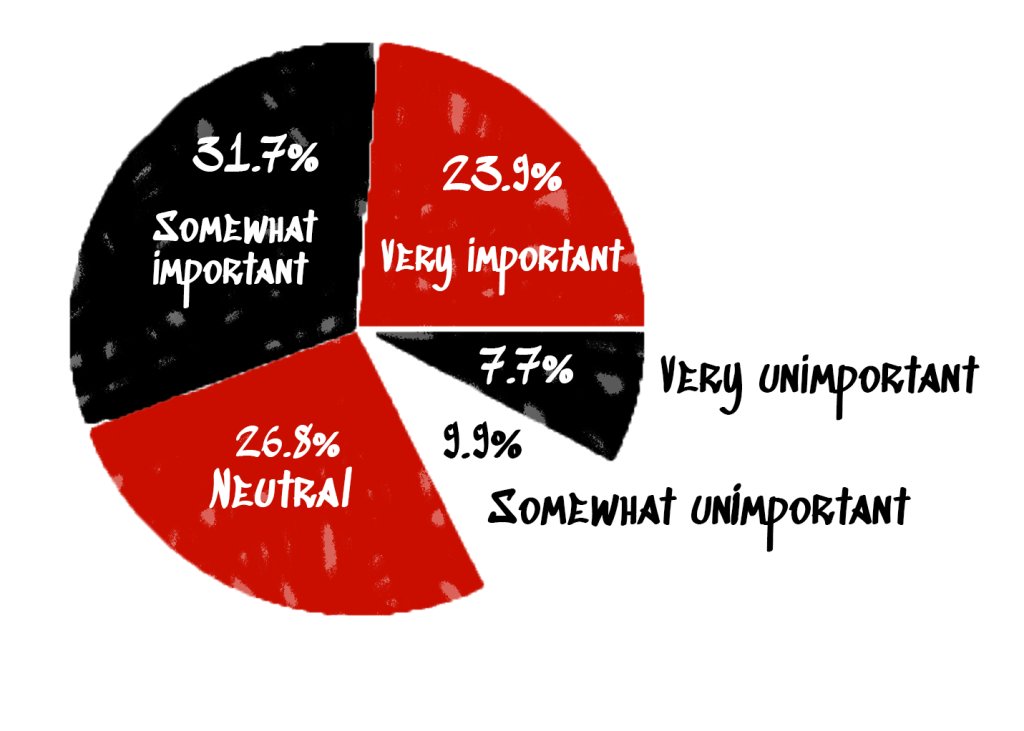
In the current landscape of AI adoption, content creation powered by AI is becoming more prevalent. Because of this many platforms are putting marks on content that they know is AI made. These platforms seem to believe that disclosure is very important. More than half of our participants agree with the platform’s thoughts with 31.7% saying it’s important and 23.9% adding very to emphasize its importance. However, over a fourth of them didn’t care either way.
How interested are they in consuming AI content?
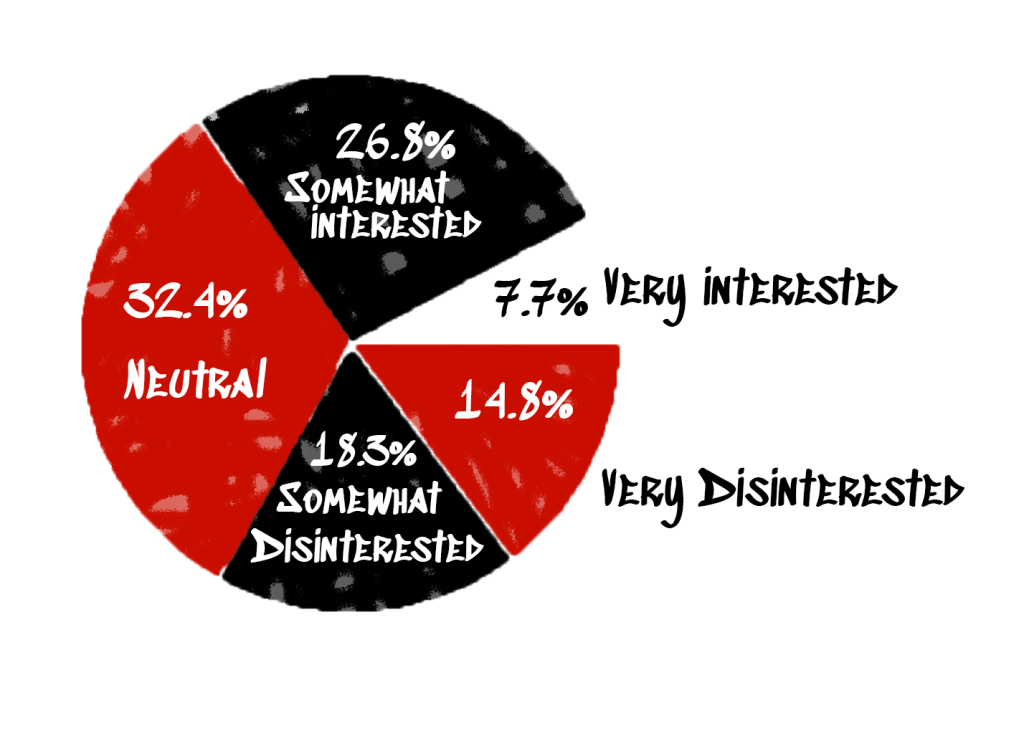
We observed a level of apathy when we asked them to rate their interest in reading or watching AI-made content as well. 32.4% simply do not care to know if content has been generated by AI. It seems to be the content they are more interested in, not what made it.
In fact, despite our thoughts going into this research, there were more people interested in the AI content (33.1%) than disinterested (34.5%). This might be because of the novelty of it. It can be so cool and interesting to see what AI can do. People are interested in comparing what it can do to what they have seen before.
As AI becomes more common in our daily lives, it will be interesting to see if attitudes towards AI-generated content change. Will people become more or less accepting of it? In the meantime, creating engaging and valuable content should be a top priority for content creators, regardless of the methods used to produce it.
If they found out it was AI made after the fact, would their opinion change?
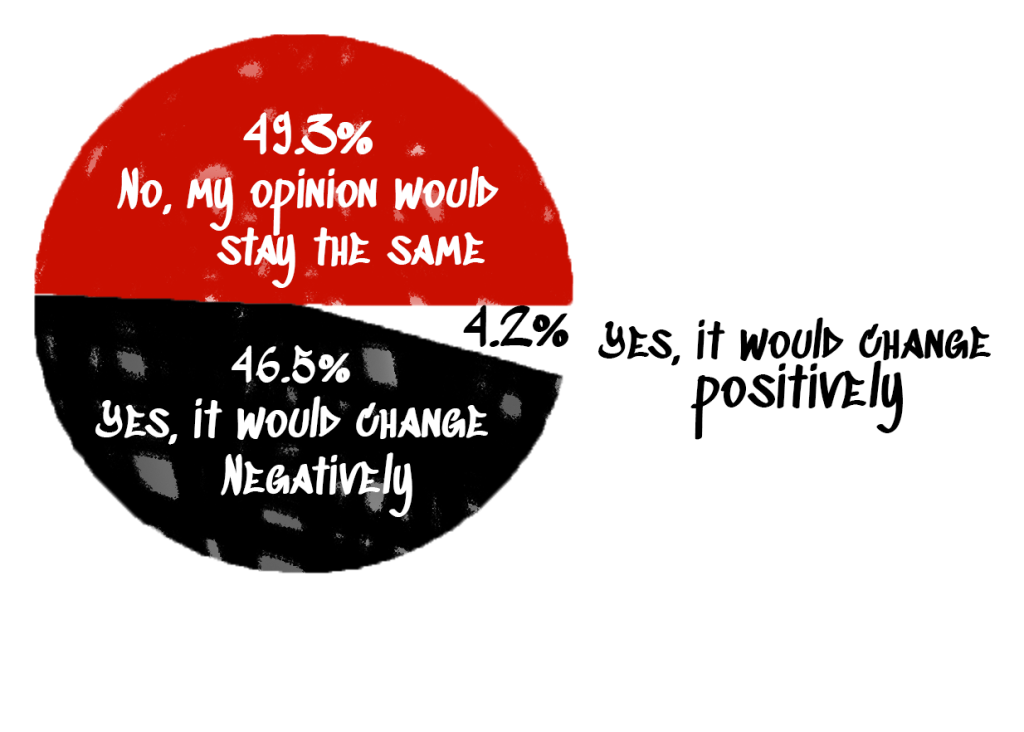
Creators are concerned about whether or not the use of AI to make content would change people’s opinions about the content and the brand. How will people react to it once they realize it is not created by humans? Do they believe it’s comparable to human-created content?
Neutral
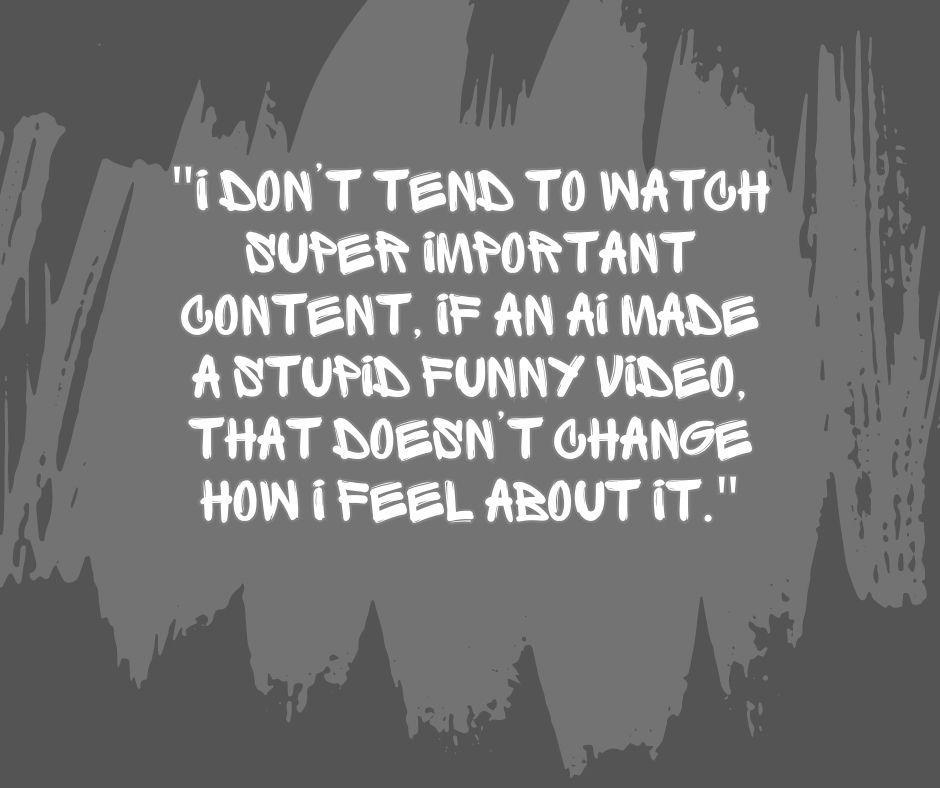
Consistent with previous findings, almost half of the respondents (49%) don’t care. Their opinion would stay the same whether the content is human or AI-generated. One respondent said “I don’t tend to Watch super important content. If an AI made a stupid funny video, that doesn’t change how I feel about it.”
Another one said “If I like the content, it wouldn’t bother me” Creating high-quality content that resonates with audiences is vital regardless of whether it is generated by AI or not. The quality of the content is more important than who or what created it.
Negatively impacted
However, 47% of the total, say their opinion would be negatively impacted if they found out that it was generated by AI. A significant portion of social media users seem to perceive AI-generated content as less valuable. One such respondent said “AI content is not interesting compared to humans who can relate to accomplishing or doing things.
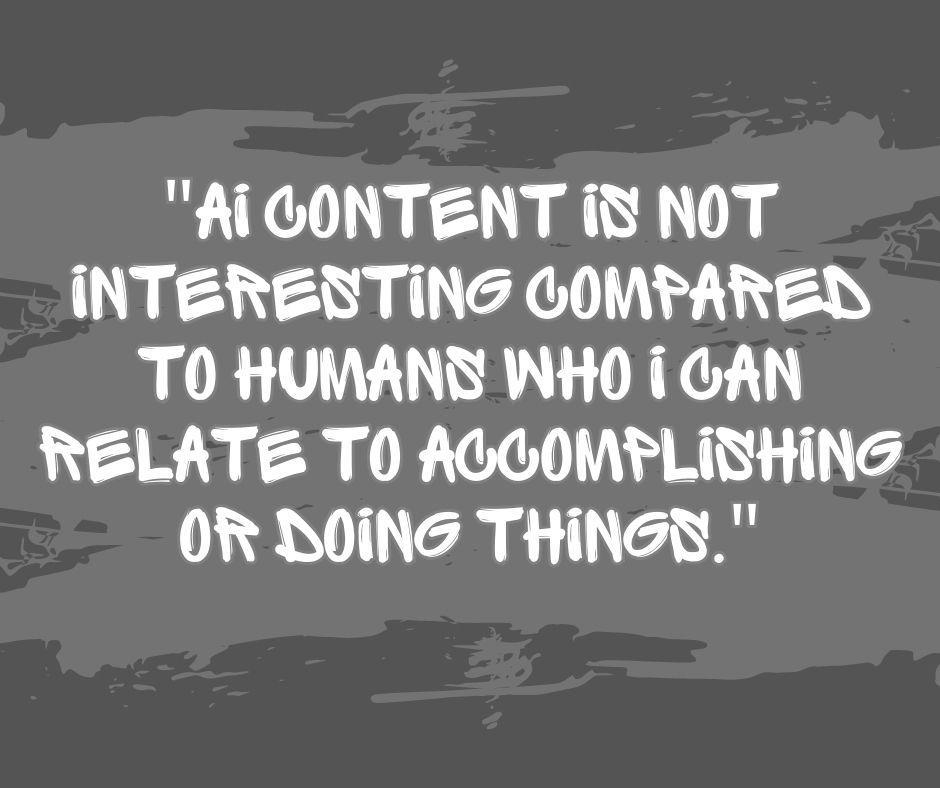
Many people just want someone to relate to. They want a creator who can relate more to the accomplishments, failures, and experiences of life. They want someone who can understand their pain points on a personal level. While AI assists with content creation, it may still lack the unique human touch that social media users long for.
There are also concerns about the reliability of the AI-created content. One respondent said, “I usually assume things are written by real people, knowing if it was written by AI would make me trust it less.” One respondent answered the open-ended question by saying, “I don’t know much about AI, on one hand, I think it can do some pretty cool things, but not knowing how exactly it’s making up information makes me a bit uneasy.” This is a fair concern. A lot of AI can present false and misleading information. This is known as AI hallucination and is a major reason that you should always check the facts if you are using AI.
Positively impacted
There was a small percentage of respondents (4%) said that their opinion of the content would be positively influenced if they found out it was created by AI. One such respondent said “I feel like I just don’t mind that certain things are so generated anymore. I think it’s kind of cool in a way.” This goes back to the interest spoken of before. They view AI-generated content as innovative and cutting-edge. They want to see what it will come up with, or they could be impressed that they couldn’t tell right away it was AI.
While many people are comfortable with AI-generated content, there is still a significant portion of the population that is skeptical of it. It will be important as we move forward to keep in mind both opinions and the concerns of each.
Which kinds of AI Content Are Users Comfortable Interacting With?
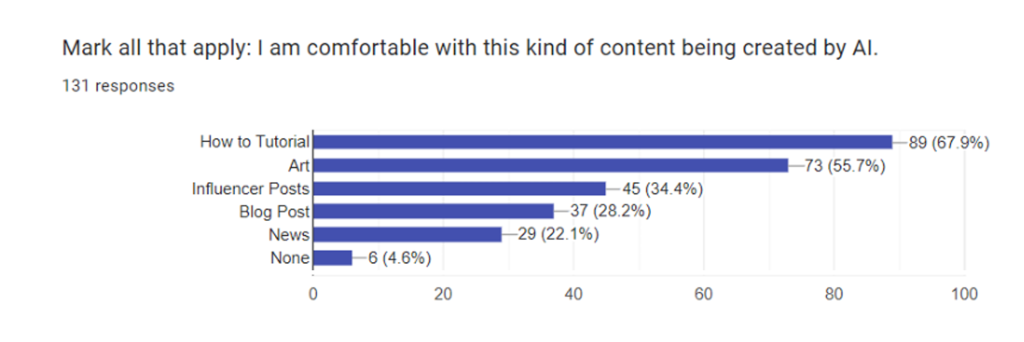
Different kinds of media have different levels of tolerance for AI inclusion. We asked which among all of these are acceptable: News, How-to Tutorials, Influencer Posts, Art, and Blog Posts. In order from most to least accepted, we will go in-depth about why they might have been placed how they did how they were.
Among these content types, How-to Tutorials emerged as the most widely accepted, with nearly 68% of respondents expressing their comfort with AI-generated content. On the other hand, News received the lowest acceptance rate, with only 22% of respondents expressing their approval of AI-created news.
HOW-TO-TUTORIALS
The finding that How-to Tutorials were the most widely accepted type of content among respondents is likely due to several factors.
First, How-to Tutorials typically provide clear and concise instructions on how to perform a task or achieve a desired outcome. This makes them a useful and valuable resource for users who are seeking practical guidance or advice.
Second, How-to Tutorials often require a significant amount of research and planning to be effective. This means that using AI for this can be particularly beneficial. It allows for automating tasks such as data analysis and content creation, freeing human creators to focus on higher-level tasks such as strategy and planning.
Finally, the widespread acceptance of AI-generated How-to Tutorials may also be because they are less likely to be seen as biased or subjective than other types of content. Opinion pieces or creative works may need more human emotion and thought. This is because How-to Tutorials typically focus on objective facts and procedures, rather than subjective or personal experiences.
ART
The second most widely accepted type of content among respondents in the survey is Art. This is significant as it suggests that audiences are becoming more accepting of AI’s role in the creative process. The 56% of respondents who expressed comfort with AI-generated art show a growing interest in new and innovative forms of artistic expression.
One factor that may contribute to this acceptance is the novelty and curiosity surrounding AI-generated art. As AI technology continues to advance and produce more sophisticated and complex output, audiences may be drawn to the unique and unconventional qualities of AI-generated art. This curiosity can also be fueled by the sense of mystery and unpredictability that comes with the AI algorithms in the creative process.
Another thing that may contribute to the acceptance of AI-generated art is the potential for collaboration between humans and machines. While AI algorithms can generate artwork independently, they often require human input and guidance in selecting and curating the input data, defining the parameters of the algorithm, and making aesthetic judgments about the output. This collaboration between humans and machines can create new and exciting opportunities for artistic expression and exploration.
Overall, the finding that AI-generated art was the second most widely accepted type of content among respondents highlights the potential for AI to contribute to the evolution and diversification of the artistic landscape.
INFLUENCER POSTS
The increasing prevalence of AI-generated content in the online space has garnered attention in recent years. Some AI-oriented stories going viral and even making headlines. For instance, Ryan Reynolds’ ad for Mint Mobile, which featured a script written by ChatGPT, garnered widespread attention and praise.
Despite the potential of AI-generated content to reach and engage with audiences, the survey results suggest that consumers may still be hesitant to accept AI’s role in certain aspects of online content creation, such as influencer marketing. Only 34% of respondents expressed their comfort with AI-generated content in the context of influencer posts.
The lower acceptance rate of AI-generated influencer posts may be because of the importance of authenticity and personal connection in influencer marketing. Influencers are often valued for their individuality, personal experiences, and ability to connect with their audiences on a personal level. AI-generated content may be perceived as lacking this personal touch and therefore less engaging and effective in terms of marketing and promotion.
AI-generated content to be perceived as inauthentic or even deceptive. The use of AI algorithms to generate content could manipulate and deceive audiences, especially if it’s not disclosed. This could result in a lack of trust and credibility in the influencer and their brand. That would ultimately harm their online reputation and followers.
Additionally, the acceptance of AI-generated influencer posts may depend on the specific context and content of the posts. Some types of content, such as product reviews or lifestyle posts, are more easily generated by AI algorithms and therefore may be more readily accepted by audiences. However, other types of content, such as personal stories or experiences, may require a greater degree of human input and authenticity to be effective and engaging.
Overall, there are potential challenges and limitations to using AI in the context of influencer marketing. Marketers and influencers should consider these factors. Engage in transparent and ethical practices when using AI-generated content in their online content creation.
BLOG POSTS
28% of respondents expressed their comfort with AI-generated blog posts. Blog posts are one of the most popular forms of online content creation, and often involve a significant amount of writing and storytelling.
Once again, a possible explanation for this is the importance of authenticity and personal voice in this form of content. Blogging is often used as a platform for individuals to share their personal experiences, opinions, and perspectives. The use of AI-generated content may be perceived as inauthentic or lacking in personality. This could result in lower engagement and readership for AI-generated blog posts. Ultimately this reduces their effectiveness as a content creation tool.
The quality of the writing and the ability to effectively communicate information and ideas may also influence the acceptance of AI-generated blog posts. While AI algorithms have made significant advancements in natural language processing and text generation, they still struggle at times to produce content that is both engaging and informative. It struggles particularly when it comes to more complex topics or niche audiences. This could lower reader satisfaction, leading to reduced acceptance.
NEWS
Lastly, we were intrigued to find that 22% were open to the idea of AI-generated news, despite the widespread dissemination of misinformation on social media. Though it is still the lowest, we initially anticipated that there would be even more negative responses to this.
If the AI is pulling from a wide enough network, it would get all opinions and not be swayed by political views or bias. This could be a reason that some are okay with news being AI-generated.
However, news articles often require a human element. Aspects such as interviews and personal anecdotes, to provide context and insight into complex issues need a human touch. AI algorithms may struggle to accurately capture and convey this human element. People may also view the particular task of news reporting as requiring the experience of empathy and the making of moral judgments, experiences, and judgments. AI may be unable to deliver that. The majority of people might therefore perceive AI-generated news as less accurate and trustworthy than news from human reporters.
CONCLUSION
While there is some apprehension towards AI-generated content, a significant portion of respondents are open to interacting with it. The content type and quality are often the most significant factors influencing people’s attitudes towards AI-generated content.
Social media practitioners should take note of these findings. Consider the potential benefits of integrating AI-generated content into their social media strategies. However, they must also be mindful of the concerns and apprehensions towards AI-generated content. It is essential to be transparent about the use of AI in content creation. Also, ensure that the content produced aligns with the values and expectations of the target audience.
AI-generated content has the potential to be an effective tool for marketers and content creators. However, it is crucial to approach it with sensitivity and care. By understanding the attitudes and concerns of their audience, creators can integrate AI-generated content into their strategies to benefit both the audience and the brand.
Recent Comments