
In today’s digitally driven world, social media platforms like Instagram have become an indispensable part of our daily lives, playing a significant role in connecting businesses and individuals with their target audiences. As these social media platforms continue to evolve, understanding the algorithms behind them becomes crucial.
But what exactly are social media algorithms?
You might have noticed that your Instagram suggested posts are different from your friends or family. This is because social media algorithms are unique to each user. These algorithms act as guidelines, ranking content based on how likely users are to engage with it.
Instagram, like other social media platforms, is in a constant state of evolution. It is designed to showcase content that users will find enjoyable and captivating, leading to regular changes in its algorithm.
By understanding the intricacies of social media algorithms, individuals and businesses can leverage these platforms effectively, optimizing their content to reach and engage their desired audience.
Instagram’s Algorithm: How it Works
Each part of Instagram has its own algorithm based on the purpose of that feature. The algorithm considers a mix of recent posts from accounts you follow and recommended content from accounts you haven’t followed yet. Instagram analyzes various factors, including your engagement history, such as follows, likes, and recent interactions, to determine what content you might be interested in.
Instagram gathers information about the posts, the individuals who made those posts, and your preferences. These factors are known as “signals.” The platform considers thousands of signals, including post recency, popularity, content format, and user interaction preferences. For example, if you tend to engage with more photo posts, Instagram will show you more photos than videos.
Instagram lists four key signals, ranked in order of importance:
Your Activity: Posts you’ve liked, shared, saved, or commented on provide insights into your interests and inform Instagram about the content you are likely to engage with.
Information about the Post: Popularity signals such as likes, comments, shares, and saves, along with other details like posting time and location, contribute to the algorithm’s understanding of the post’s appeal.
Information about the Person Who Posted: Instagram assesses the level of interest you may have in a person based on signals such as recent interactions with their content.
History of Interactions: Your past interactions with an account help the algorithm gauge your general interest in seeing posts from that person. This includes activities like commenting on each other’s posts.
Except for Instagram’s Explore algorithm, which focuses on popularity of a post, the most influential factor in all of Instagram’s algorithms is how users engage with your posts.
How does Instagram’s algorithm impact posting frequency? The short answer–It doesn’t.
Analyzing Posting Frequency and Engagement Rates by Industry
Despite the common perception that Instagram’s algorithm directly influences posting frequency, our analysis of large companies across various industries suggests otherwise. We analyzed the posting frequency and engagement rates of 50 large companies across five industries (Food/Beverage, Travel, Fashion/Beauty, Sports, and News/Media) on Instagram over the past month. Although there were significant variations in posting frequency, the engagement rates remained similar. Let’s examine the graphs below to gain a clearer understanding of the relationship between posting frequency and engagement rates.
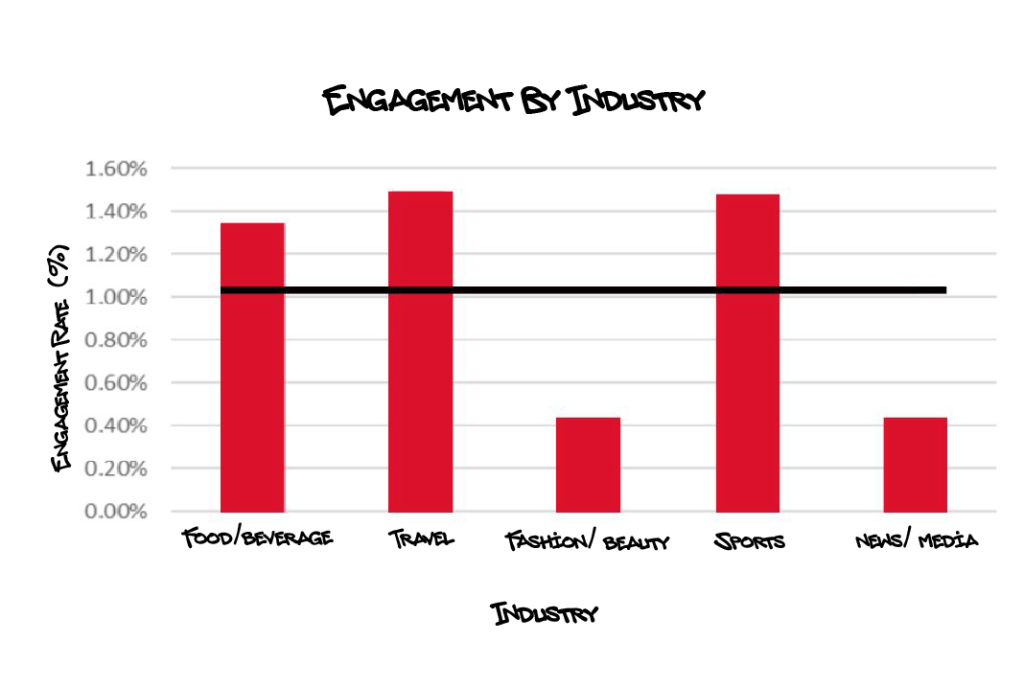
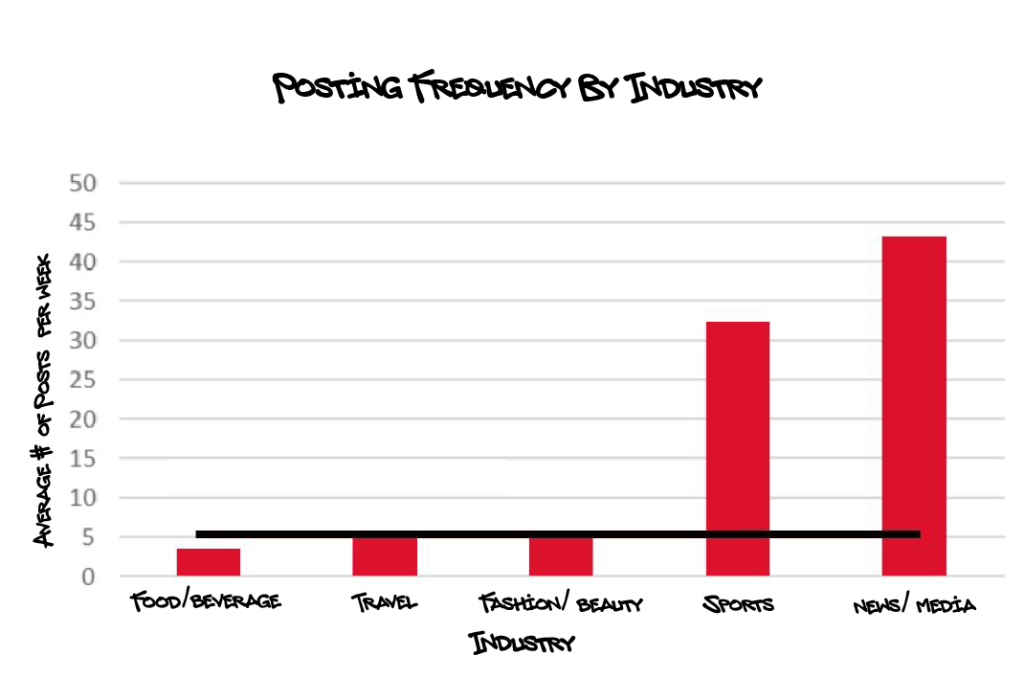
These graphs compare the median posting frequency and average engagement rates across the five industries observed. News/Media businesses, on average, posted 43.1 times per week with an engagement rate of 0.42%. In contrast, Food/Beverage businesses posted only 3.3 times per week but achieved a higher engagement rate of 1.34%. Among the businesses, Expedia emerged as the top performer with a remarkable 12.44% engagement rate and an average posting frequency of 20 times per week. On the other hand, Mashable, despite posting an average of 21 times per week (similar to Expedia), experienced a 0% engagement rate, making it the least successful in terms of user interaction.
To explore the relationship between posting frequency and engagement rates, we conducted a correlation analysis. The results, presented in this graph, show a correlation coefficient of -0.008, indicating an insignificant correlation between the two variables.
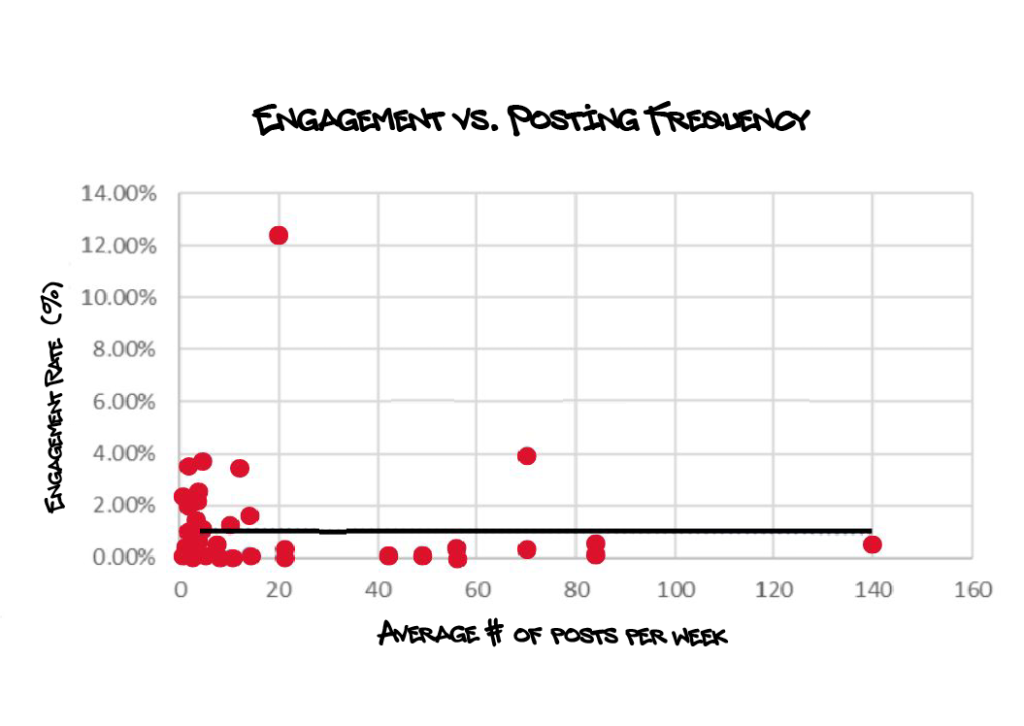
These findings suggest that posting frequency alone does not determine engagement success on Instagram. Other factors such as content quality, relevance, audience preferences, and industry dynamics play crucial roles.
Matthew Maroon, a marketing professor at Brigham Young University-Idaho, explains why the optimal posting frequency on Instagram varies depending on the industry and the nature of the business. Maroon states, “If you’re more of a service industry, so doctors, lawyers, lawn care, or dentists, I don’t think the frequency should be multiple times a day. I don’t think people want to be reminded of the dentist multiple times a day. If you’re posting that often, a lot of that content will be somewhat mundane.” However, for businesses like apparel stores or those with products that can be showcased and demonstrated to customers, he advises, “That’s content that is fun and engaging. You want to do as much of it as you can so people can become familiar with it, and eventually become part of your tribe.” Posting frequency should be tailored to the type of business, ensuring that the content remains interesting and aligns with the preferences of the target audience.
Should You Post Daily?
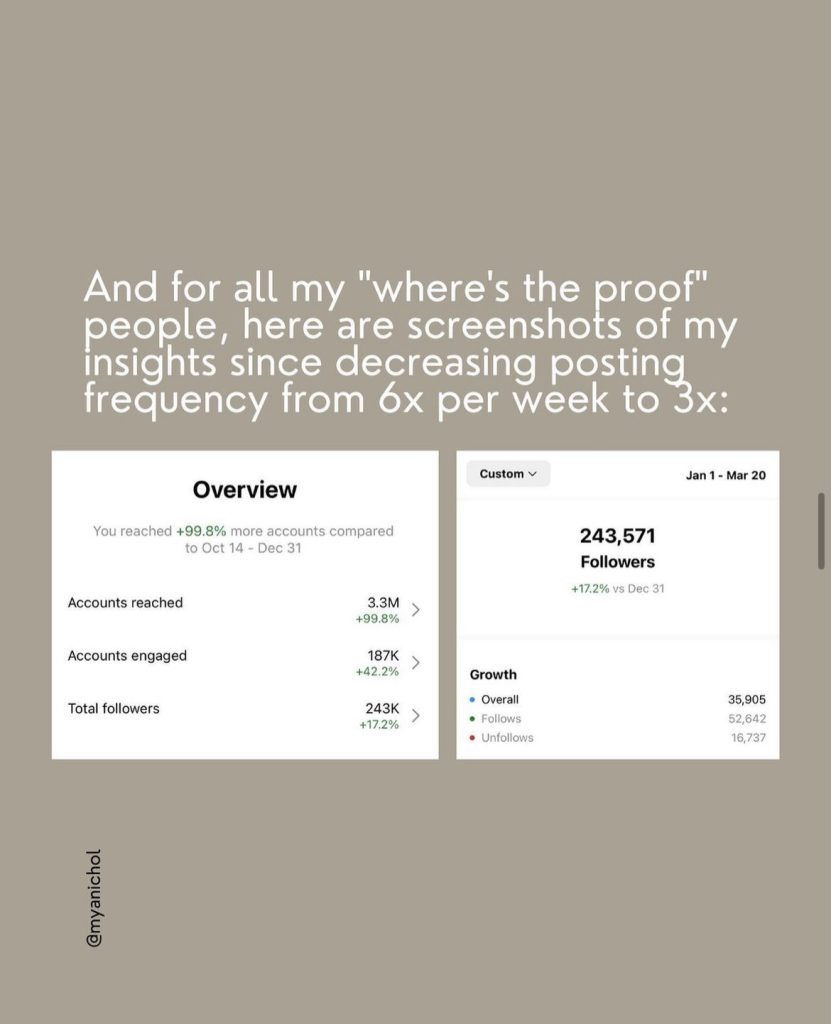
Matthew Maroon’s insights on optimal posting frequency align with the experience shared by Mya Nichol, an Instagram expert and business coach. While many Instagram experts suggest that a high posting frequency is essential to staying relevant, Mya Nichol says that posting daily is not necessary for Instagram growth. In fact, Mya Nichol shares screenshots of business analytics that show her account saw 42.2% increase in engagement and a 17.2% increase in followers after she switched from posting six times a week to three times a week.
According to Mya Nichol, posting daily can be beneficial as it allows creators to gain an insight into what resonates with their audience more quickly. Additionally, the more content a business puts out, the more potential that business has for their content to go viral, which leads to business growth. Ultimately, Mya Nichol advises businesses to determine a posting frequency that they can consistently maintain, ensuring that the focus remains on producing high-quality content that connects with their audience.
Quality Over Quantity
In our interview with Karinya, owner of a small nail business (@nails.by.karinya on Instagram), she shared her social media strategy. With a focus on client care and business growth, Karinya prioritizes quality content over quantity. She invests in her phone, pays attention to lighting and framing, and emphasizes authenticity and originality. Avoiding tools like Photoshop, Karinya maintains realistic standards and fosters an honest connection with her followers.
Karinya admits that posting on social media more frequently and consistently would enhance her social media presence. She currently posts twice a week, but based on personal experience, she has seen more success when she posts more often. She has also noticed that taking breaks from posting have resulted in a loss of followers.
Overall, Karinya encourages quality content over quantity because quality content is engaging and builds a relationship of trust with your growing following. As Karinya says, “With quality content comes social proof.”
Mastering Posting Frequency: Valuable Tips from Matthew Maroon
In the video below, Matthew Maroon continues his discussion on how to find a posting frequency that works for your business based on your audience.
Here are 3 things to keep in mind
- Audience
- Platform
- Type of Business
Expert Insights: Tailoring Your Posting Frequency
Brittney Costello, a senior marketing manager at Deseret Digital Media, offers several additional insights about how often influencers and businesses should post for optimal results.
Influencers thrive on frequent content updates. Since influencer accounts revolve around building a loyal following and engaging with their audience, regular posting is crucial. It’s recommended to post multiple times a week, if not daily to maintain visibility and strengthen the connection with your followers. According to Costello, Instagram is known for its fast-paced nature, which allows for more frequent updates. She encourages influencers to post often, especially utilizing features like stories to maintain their following.
For businesses, timeliness is key, especially when it comes to content centered around events or current trends. Such content can be posted more frequently compared to evergreen content. It’s crucial to leverage timely opportunities to increase engagement and stay relevant in the eyes of the audience.
Additionally, it’s important for businesses to keep an eye on their competitors. Monitoring competitors can serve as a trigger for research and help identify trends, strategies, and posting frequencies that are successful in the industry. Repurposing content and diversifying it across different platforms allows for more frequent posting while maintaining a consistent brand presence.
In the realm of social media, there is no one-size-fits-all approach. Matthew Maroon emphasizes the need for tailored strategies. He states, “There’s no cookie-cutter way to say social media equals do x, y, and z. It’s like social media equals x, y, and z per platform, per business, per audience.” In other words, understanding the unique characteristics of each platform, the business’s goals, and the target audience is crucial in determining the ideal posting frequency.
Data-Driven Decision-Making: Finding the Right Posting Frequency
Maroon highlights the importance of data-driven decision-making. While there are general best practices available for posting frequency on platforms like Instagram, he cautions that these numbers may not directly translate to every business. He advises, “It’s going to be up to you as the social media manager to see what the data says about what the right frequency is for you and your business.”
Considering the ever-evolving nature of social media algorithms, Maroon suggests adopting a trial and error approach. He emphasizes the significance of staying consistent while occasionally experimenting with different posting frequencies and formats. With Instagram constantly updating its algorithm, Maroon advises social media managers to be adaptable and open to change. He states, “Always testing will help you learn and optimize.”
Dr. Pepper, one of the fifty businesses we observed, regularly experiments with their posting frequency. In the month of May, they consistently posted once a week, resulting in an engagement rate of 3%. However, in June, they decided to increase their posting frequency to an average of 1.75 times per week, and as a result, their engagement rate rose to 3.5%. This example highlights the importance of testing different posting frequencies to find the sweet spot that resonates best with the target audience.
As businesses navigate the intricacies of social media, the key takeaway from Maroon’s insights and Dr. Pepper’s example is the need for customization and adaptability. By analyzing data, experimenting with different approaches, and staying informed about platform updates, businesses can fine-tune their posting frequency to effectively engage their audience and achieve their social media objectives.
Why You Should Understand the Algorithm
Algorithm Significance
Social media algorithms play a significant role in shaping the content we see on platforms like Instagram. Understanding these algorithms is crucial for businesses and individuals looking to connect with their target audience effectively. Instagram’s algorithm takes into account various factors such as user activity, post popularity, information about the person who posted, and history of interactions to determine the content users are likely to engage with.
Not One-Size-Fits-All
When it comes to posting frequency, our analysis across different industries reveals that there is no one-size-fits-all approach. Some businesses benefit from posting frequently while others achieve high engagement rates with lower posting frequency. Factors like content quality, relevance, audience preferences, and industry dynamics are equally important in determining engagement success on Instagram. It is essential for businesses to find the right balance and regularly assess their posting strategy to optimize engagement rates.
Tailor your Strategy
Experts suggest that influencers should post frequently to maintain visibility and strengthen their connection with followers, while businesses should consider factors such as industry, platform, and timeliness when determining their posting frequency. Tailored strategies based on data-driven decision-making are key to finding the optimal posting frequency for each business. It is essential to analyze data, experiment with different approaches, and stay adaptable in the ever-changing landscape of social media algorithms.
Quality over Quantity
Ultimately, quality content should always take precedence over quantity. Building a relationship of trust with the audience through authentic and engaging content is crucial for long-term success on social media platforms. By prioritizing quality, monitoring engagement metrics, and staying informed about platform updates, businesses can effectively engage their audience and achieve their social media objectives.
Recent Comments